The Covered Bridge Capital of the World
The Covered Bridges of Parke County
Wooden spans over quiet creeks, tucked along country roads. Find each bridge, see where it sits on the map, and plan your own bridge-hunting day.
A Little History
Why Parke County is bridge country.
Parke County’s covered bridges date back to the 19th century, when skilled builders like Joseph J. Daniels and Joseph A. Britton constructed wooden crossings to connect rural communities. Their roofs and siding protected the timber from the elements, allowing these remarkable structures to endure for generations.
Through preservation efforts and a shared appreciation for local history, the bridges became the heart of Parke County’s identity. Since 1957, the annual Covered Bridge Festival has celebrated this heritage, welcoming visitors each fall to explore historic bridges, scenic countryside, local crafts, and small-town traditions.
Find a Bridge
Bridge Directory
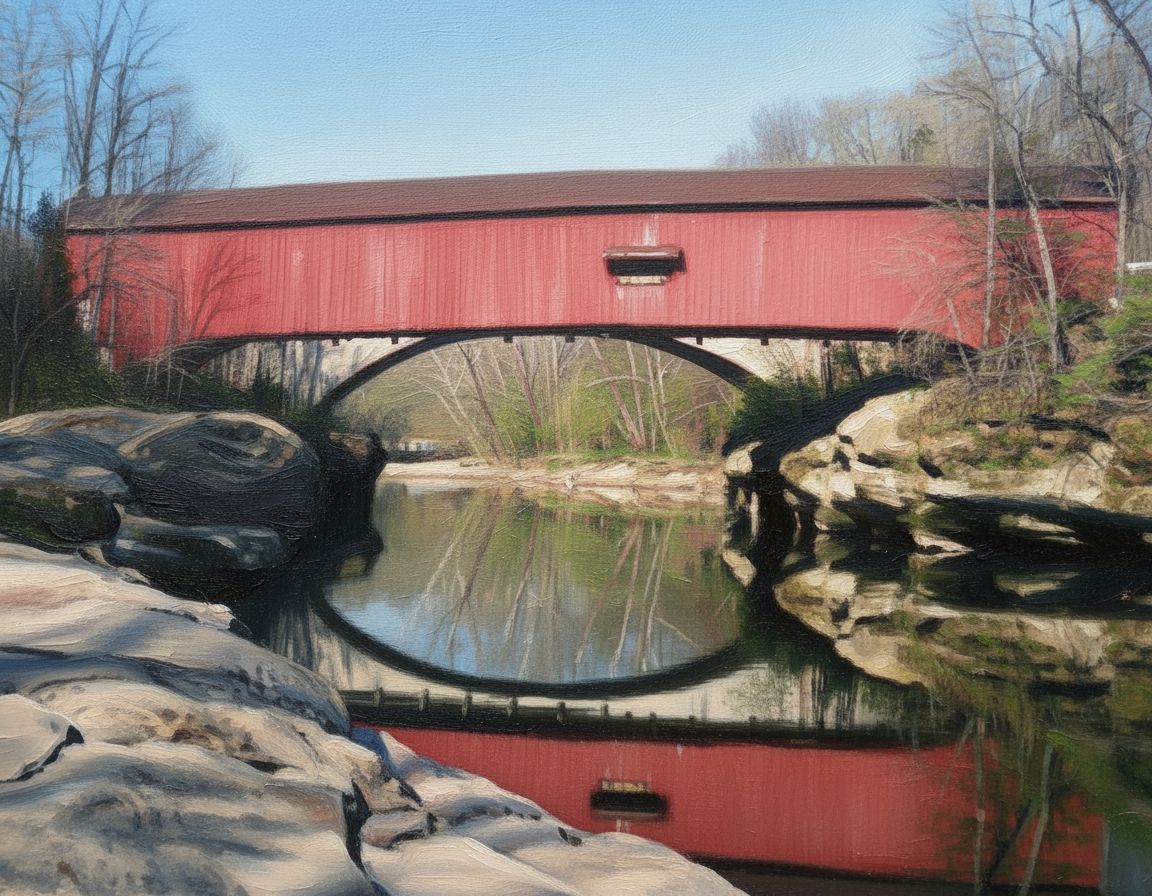
Browse every covered bridge in the county. Filter by region or search by name, creek, or road.
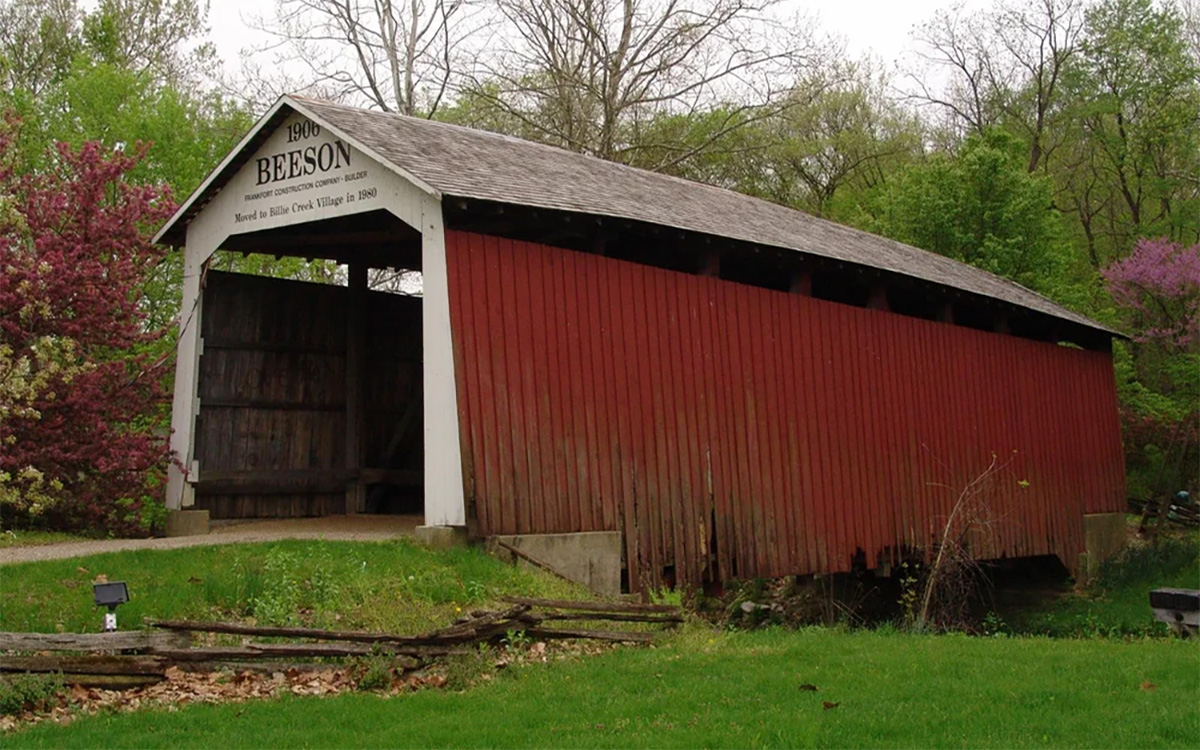
Beeson Bridge
Burr Arch construction by Frankfort Construction Co. Was moved to Billie Creek in 1980.
Crosses: Roaring Creek
Near: Billie Creek Village
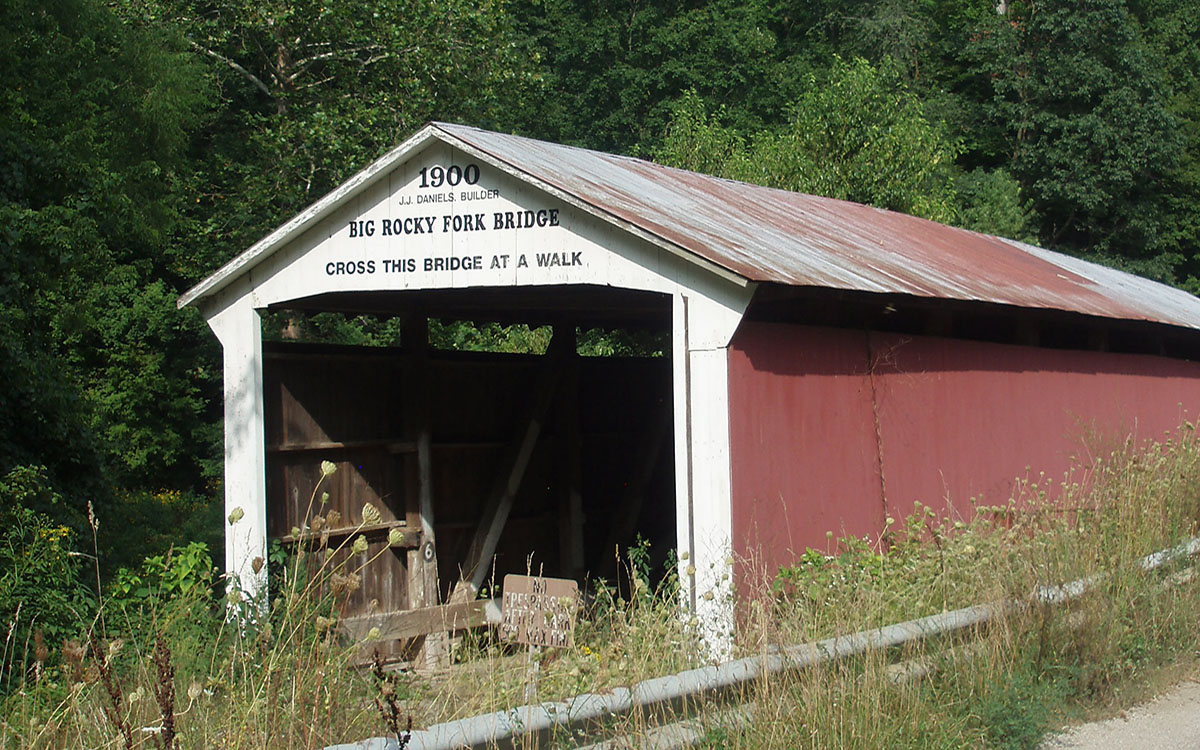
Big Rocky Fork Bridge
Burr Arch construction by Joseph J. Daniels.
Crosses: Big Rocky Fork Creek
Near: County Road 720
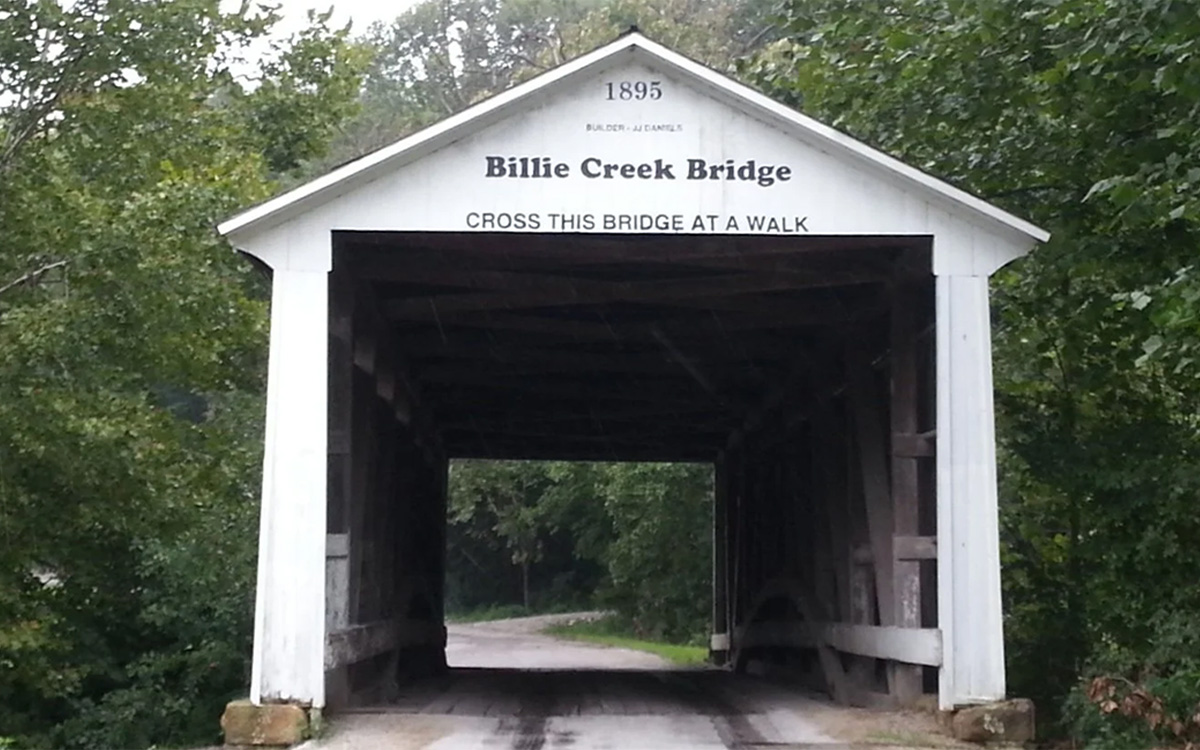
Billie Creek Village Bridge
Burr Arch construction by Joseph J. Daniels. Open to traffic except during village hours. 3 tons limit.
Crosses: Williams Creek
Near: Billie Creek Village
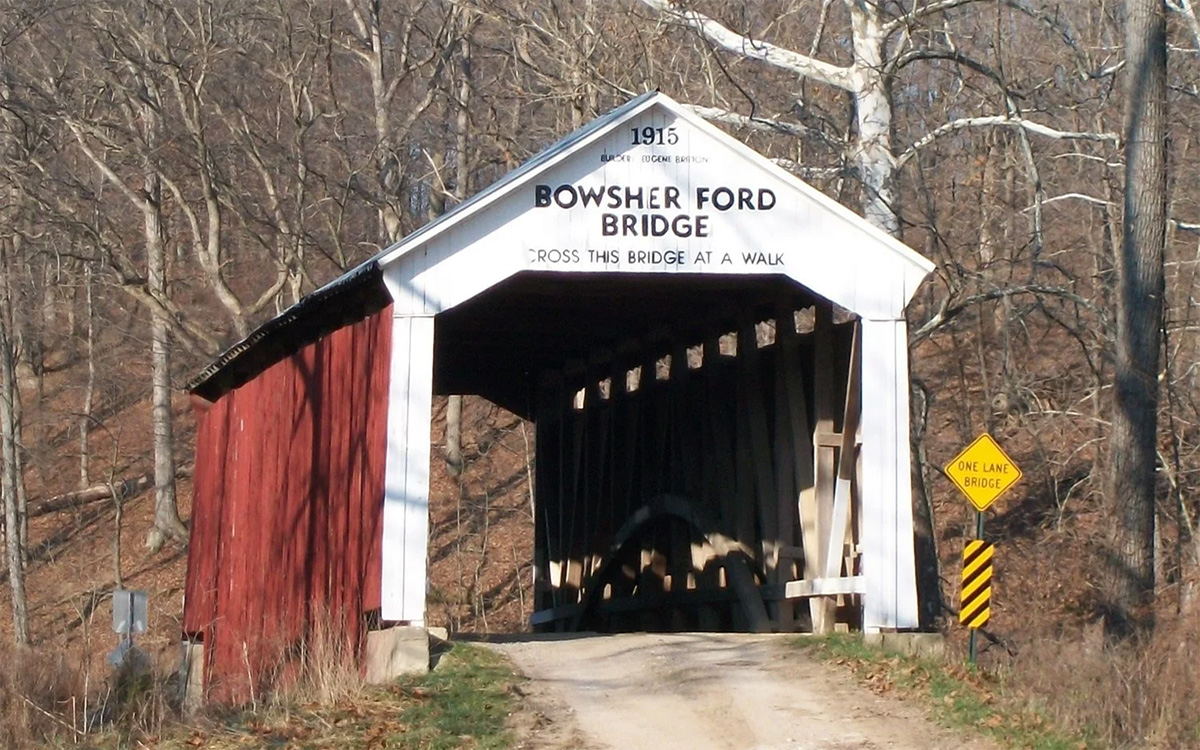
Bowsher Ford Bridge
Burr Arch construction by Eugene Britton, son of J.A. Britton. 2 tons limit.
Crosses: Mill Creek
Near: Tangier
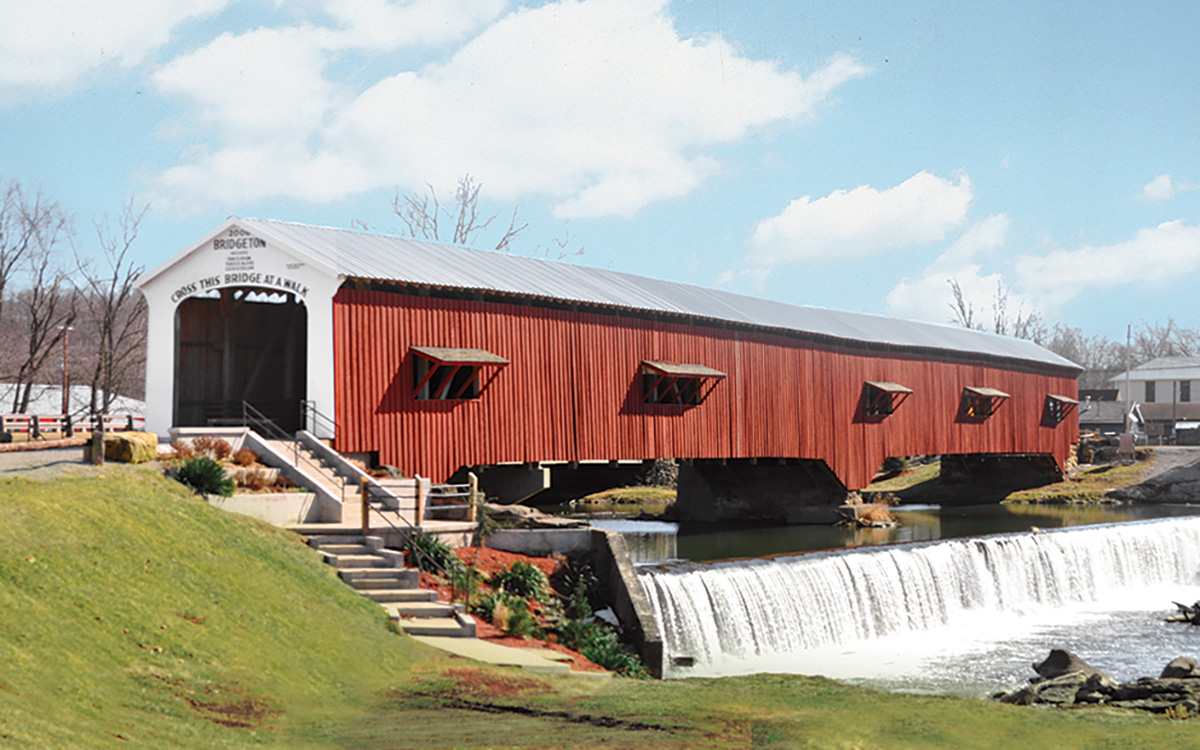
Bridgeton Bridge
Burr Arch construction, rebuilt in 2006 after arson. Double span.
Crosses: Big Raccoon Creek
Near: Bridgeton
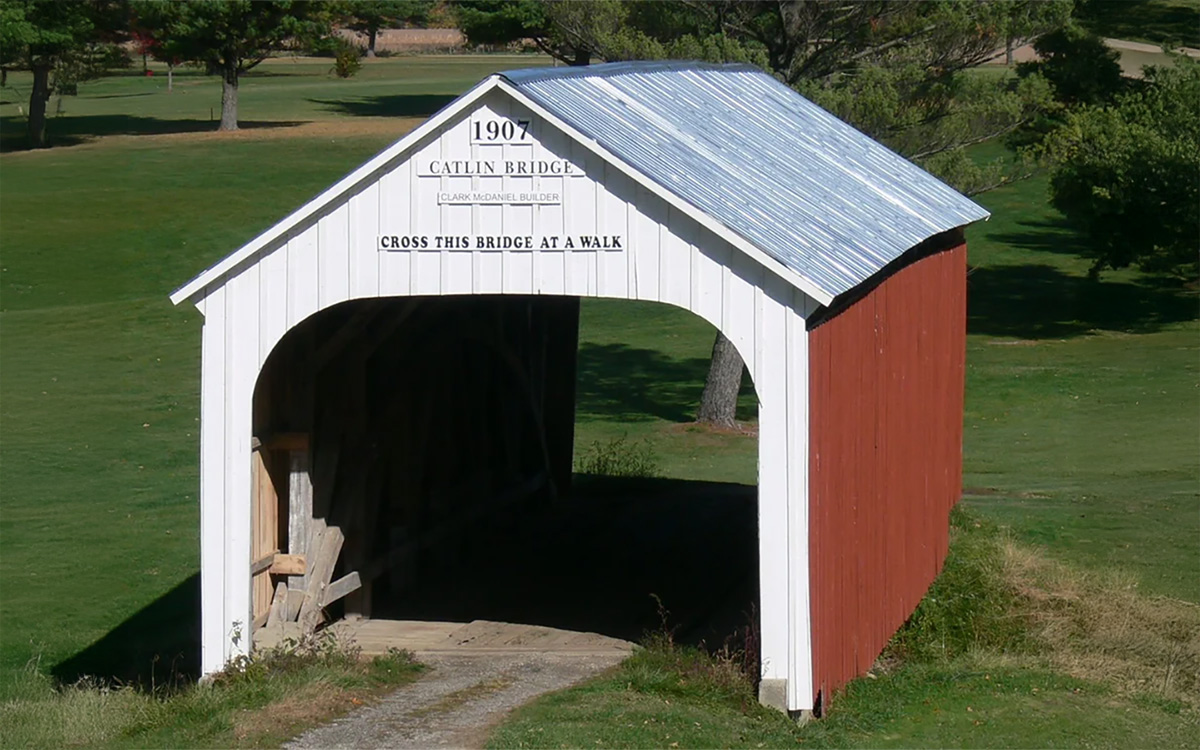
Catlin Bridge
Burr Arch construction by Clark McDaniel. Was moved from original location in 1961.
Crosses: Bill Diddle Creek
Near: Parke County Golf Course
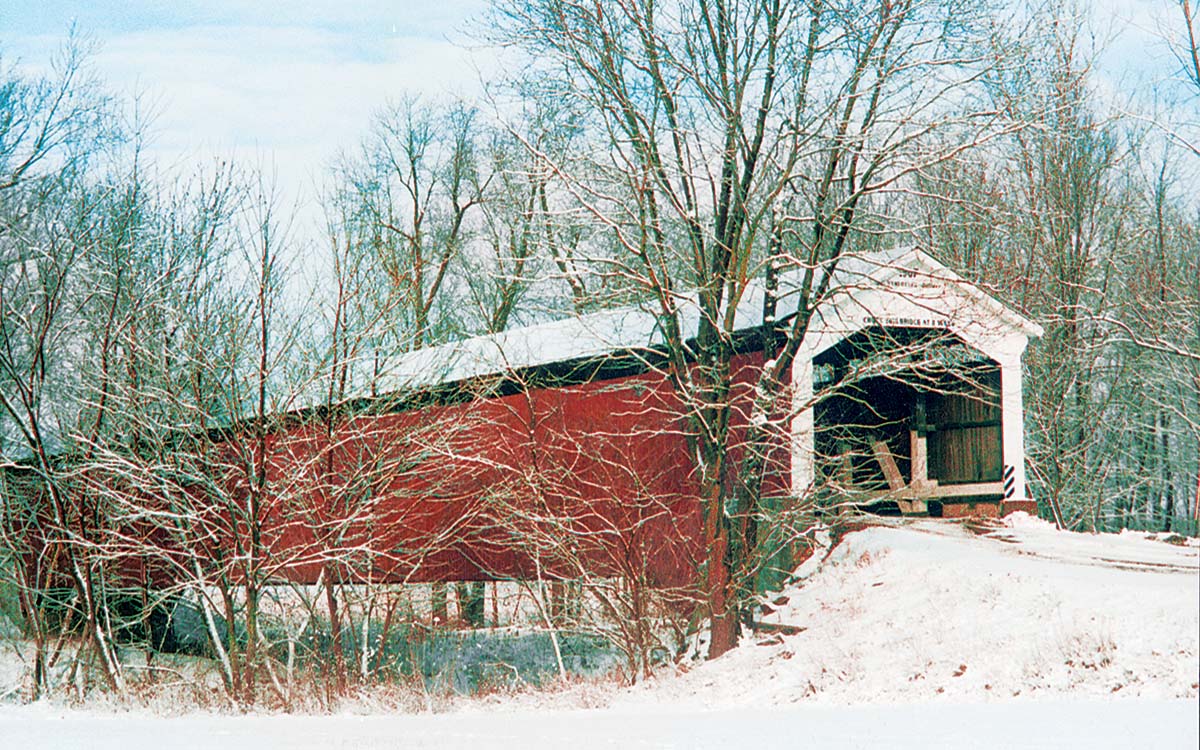
Conley’s Ford Bridge
Burr Arch construction by J.L. Van Fossen. Built of white pine, whereas many bridges in the county were built of poplar. 6 tons limit.
Crosses: Big Raccoon Creek
Near: County Road 550 East
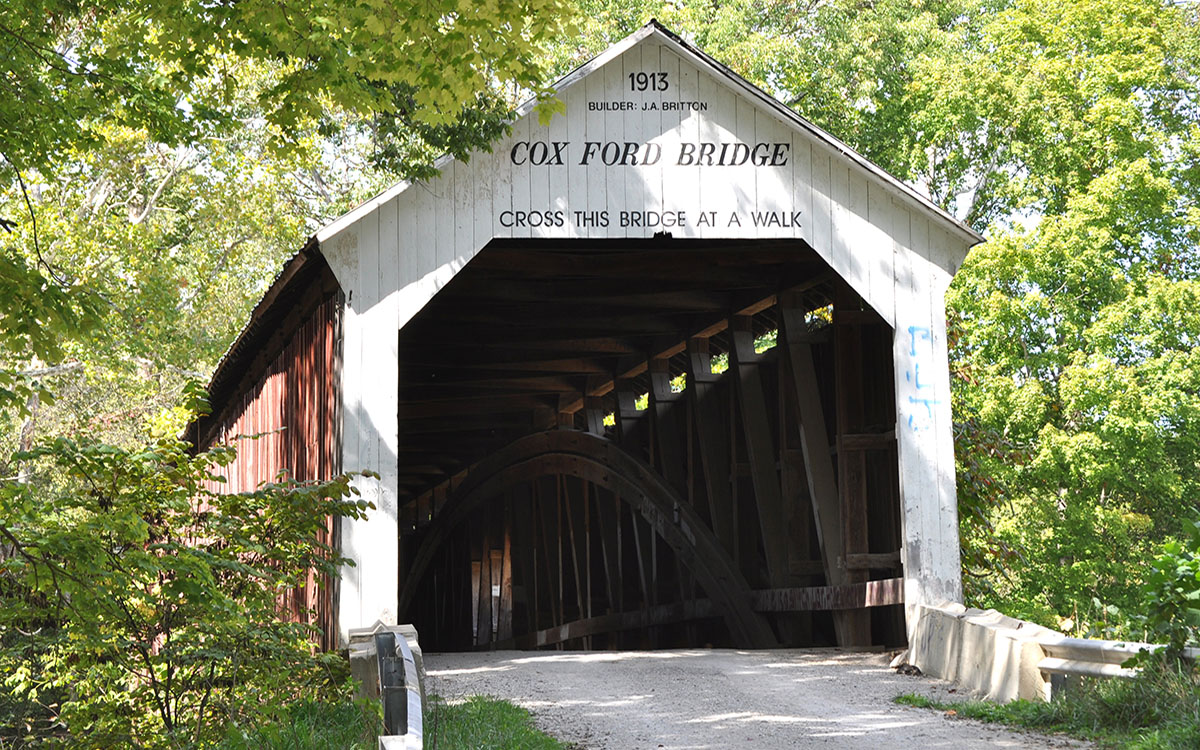
Cox Ford Bridge
Burr Arch construction by J.A. Britton. Replaced an iron bridge destroyed by flood in 1912. The arches in this bridge are almost 60 years older than the rest of the bridge.
Crosses: Sugar Creek
Near: Turkey Run State Park
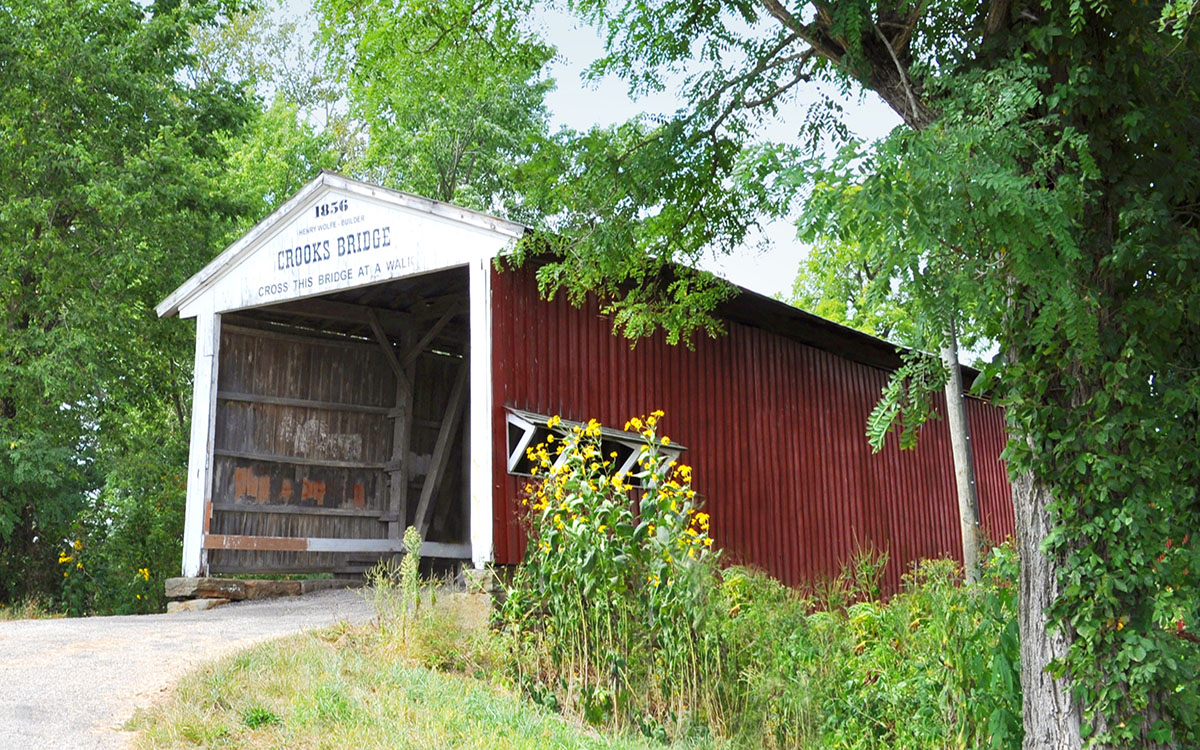
Crooks Bridge
Rebuilt in 1867 by Gen. Arthur Patterson. Burr Arch construction, built by Henry Wolfe. 3 tons limit.
Crosses: Little Raccoon Creek
Near: Crooks Bridge Road | CR 225E
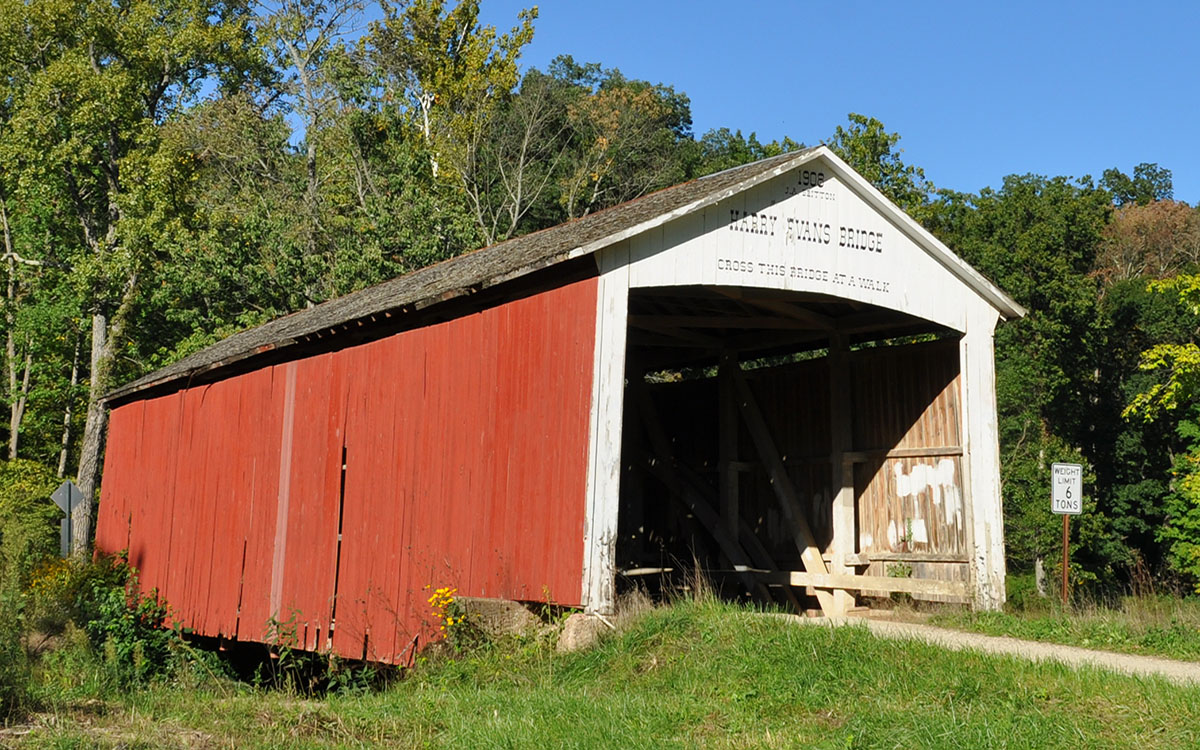
Harry Evans Bridge
Burr Arch construction by J.A. Britton. 6 tons limit.
Crosses: Rock Run Creek
Near: Coxville
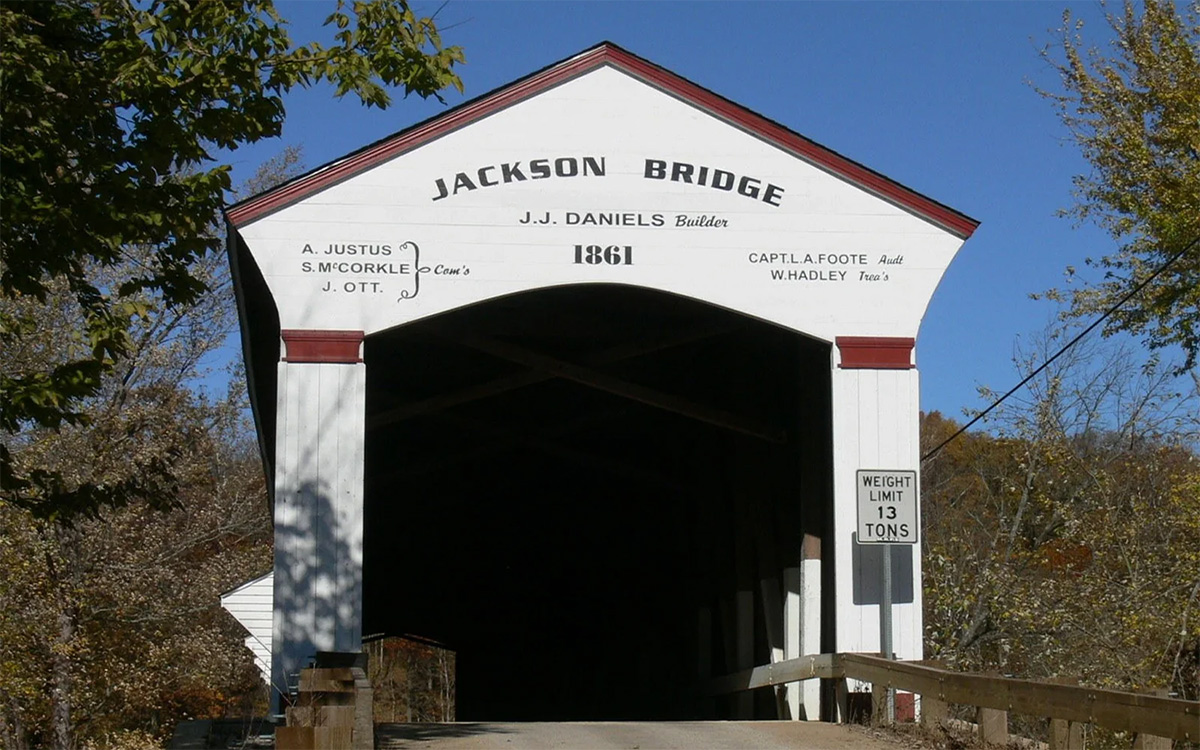
Jackson Bridge
Double Burr Arch construction by Joseph J. Daniels. Longest single span still in use. 5 tons limit.
Crosses: Sugar Creek
Near: Bloomingdale
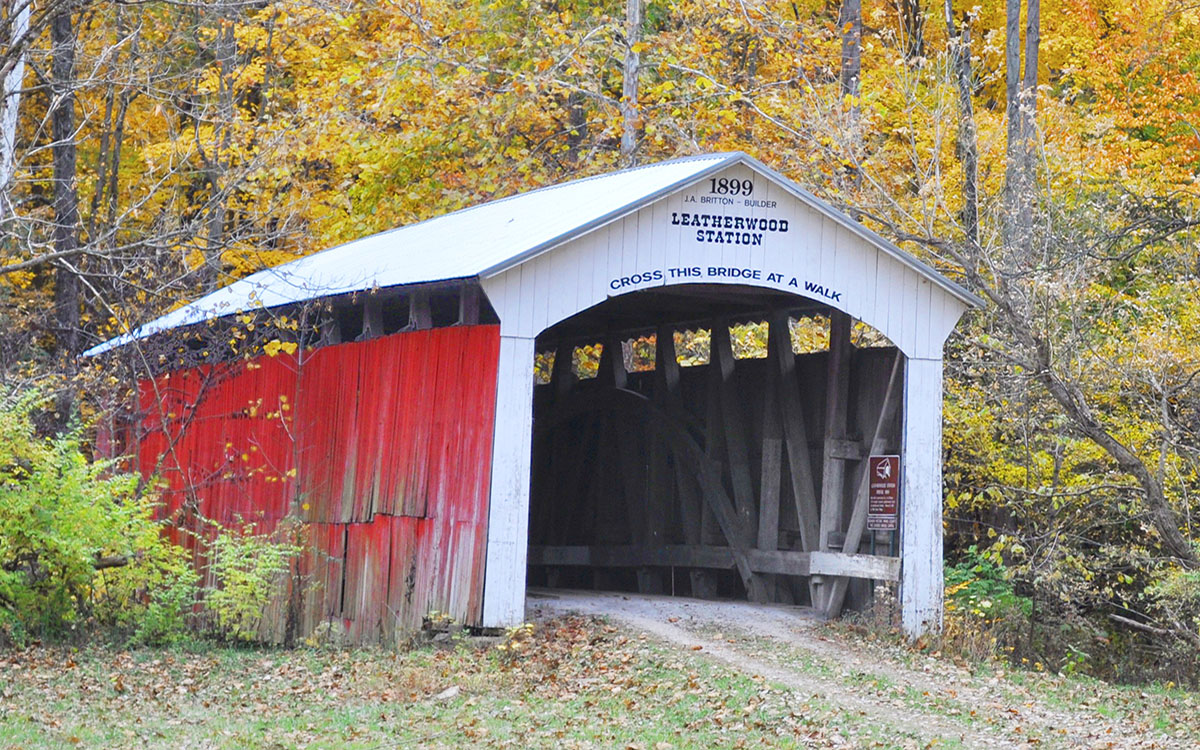
Leatherwood Station Bridge
Burr Arch construction by J.A. Britton. Moved in 1981 to Billie Creek Village.
Crosses: Leatherwood Creek
Near: Billie Creek Village
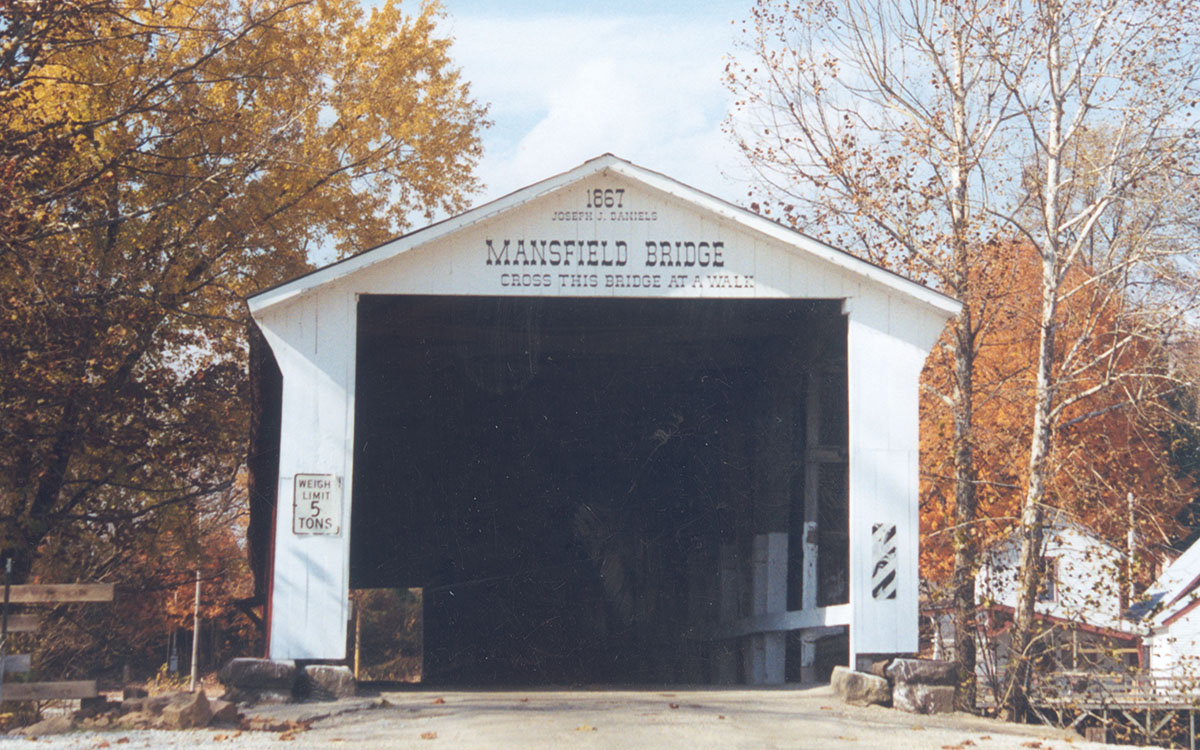
Mansfield Bridge
Burr Arch construction by Joseph J. Daniels. Double span. 5 tons limit.
Crosses: Big Raccoon Creek
Near: Mansfield
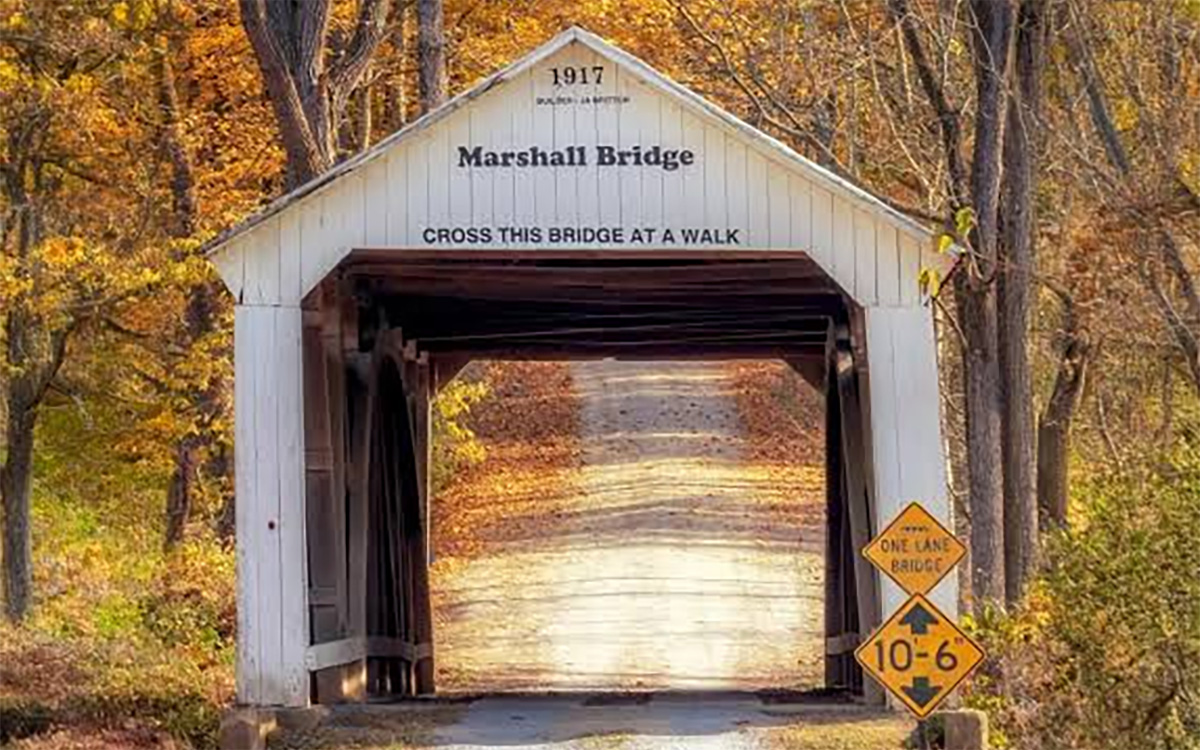
Marshall Bridge
Burr Arch construction by J.A. Britton. 5 tons limit.
Crosses: Rush Creek
Near: County Road 800 N
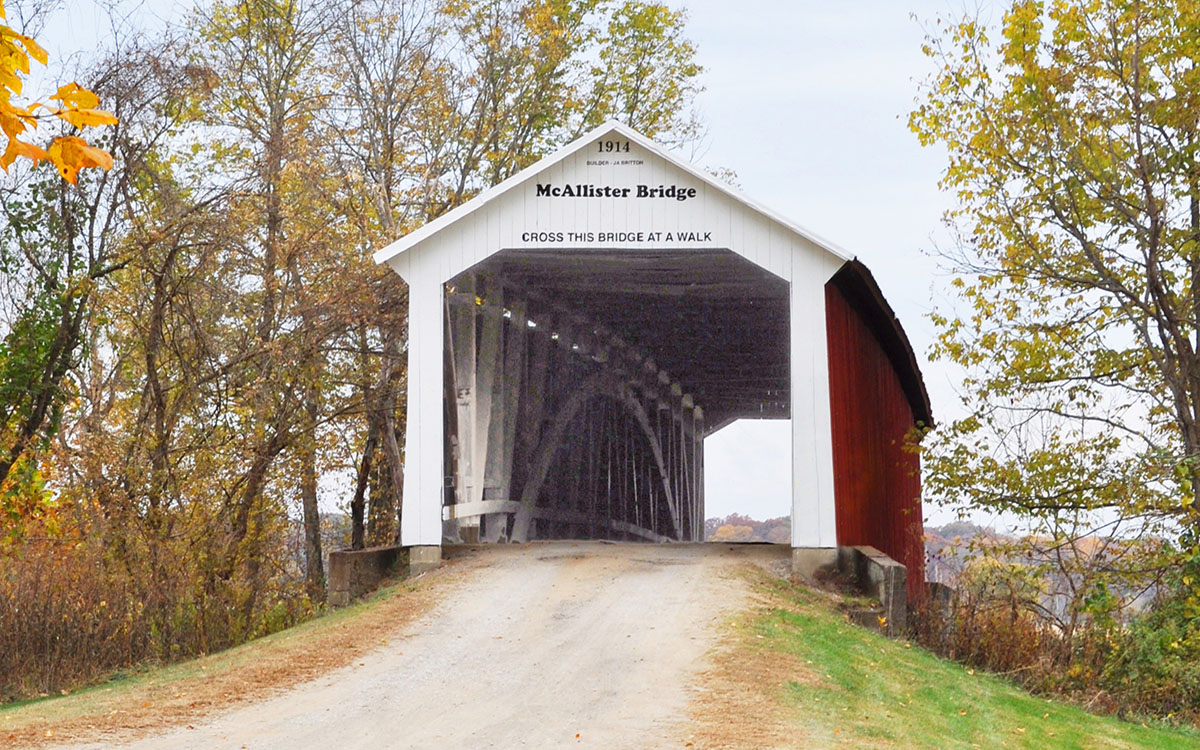
McAllister’s Bridge
Burr Arch construction by J.A. Britton. 7 tons limit.
Crosses: Little Raccoon Creek
Near: County Road 400S
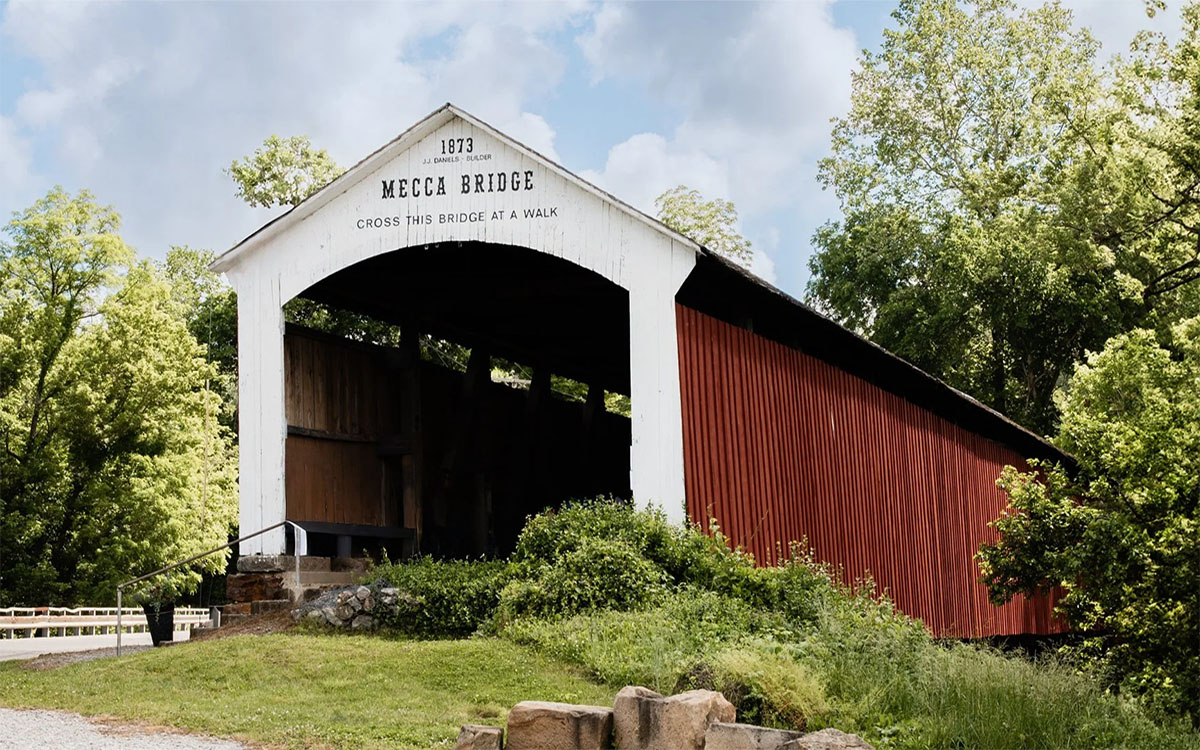
Mecca Bridge
Burr Arch construction by Joseph J. Daniels.
Crosses: Big Raccoon Creek
Near: Mecca
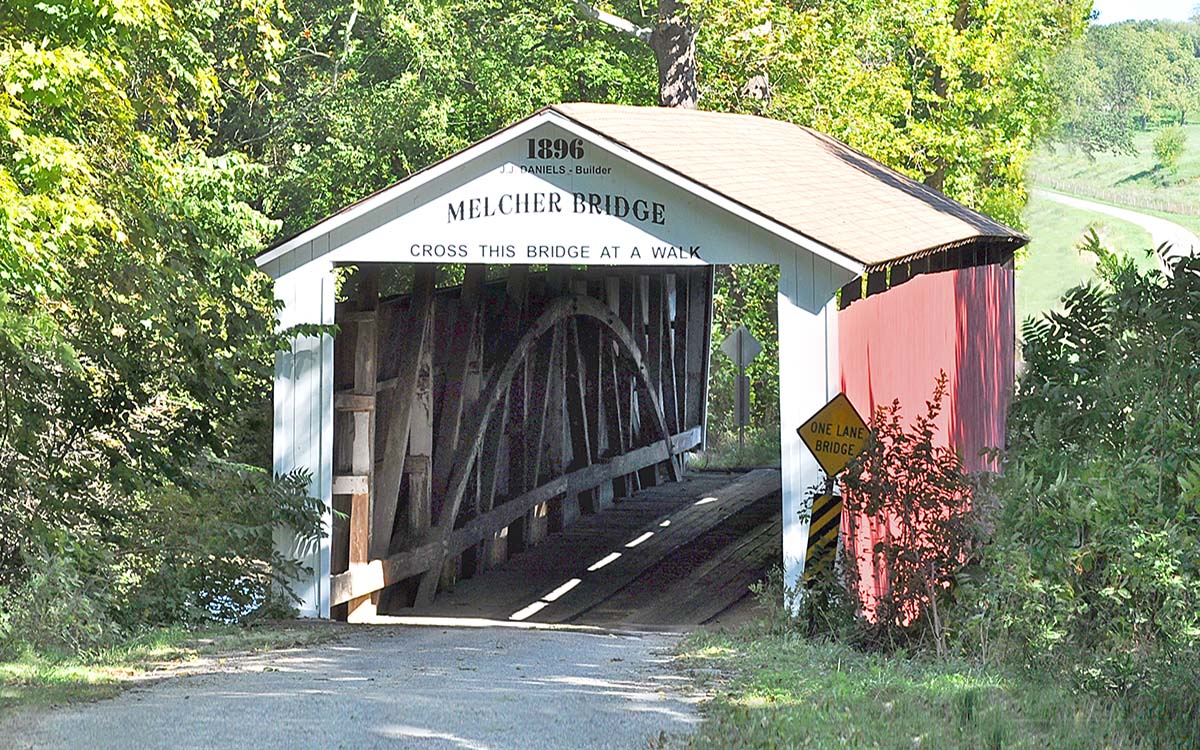
Melcher Bridge
Burr Arch construction by Joseph J. Daniels. Sometimes called Klondyke Bridge for a nearby community of the same name. 6 tons limit.
Crosses: Leatherwood Creek
Near: Strawberry Road | Klondyke Community
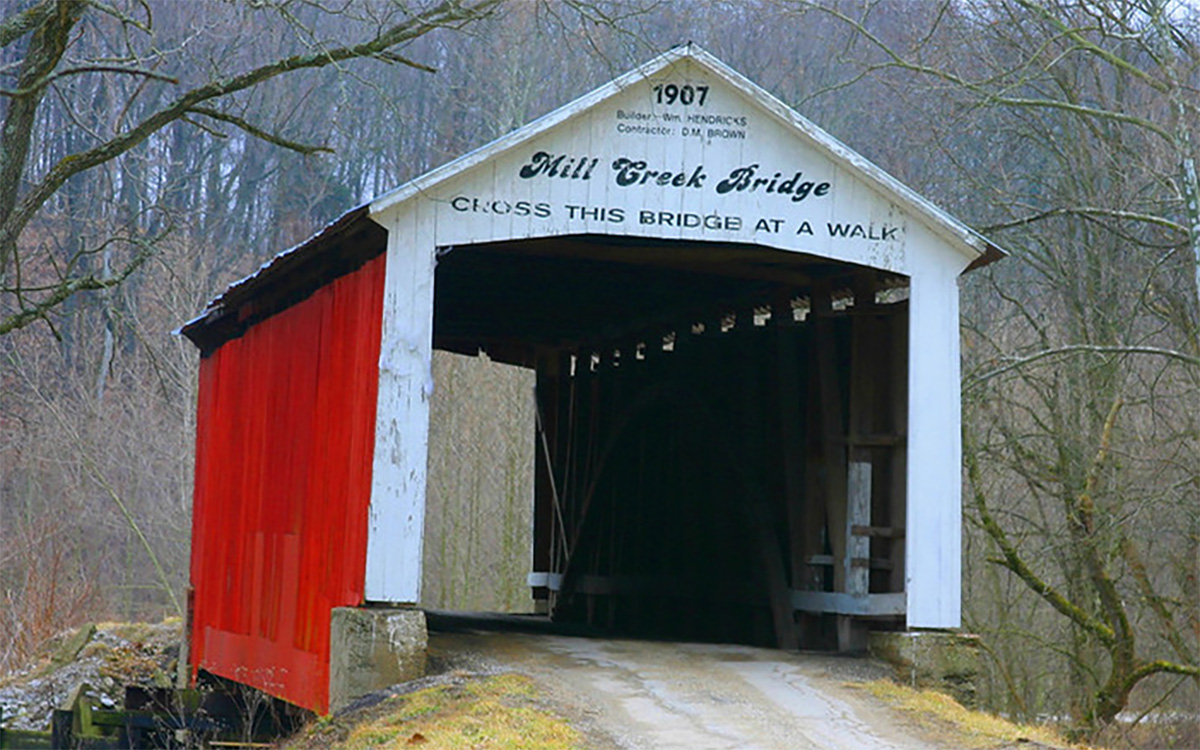
Mill Creek Bridge
Burr Arch construction by D.M. Brown. Sometimes called “Tow Path Bridge”. 3 tons limit.
Crosses: Mill Creek
Near: Tow Path Road
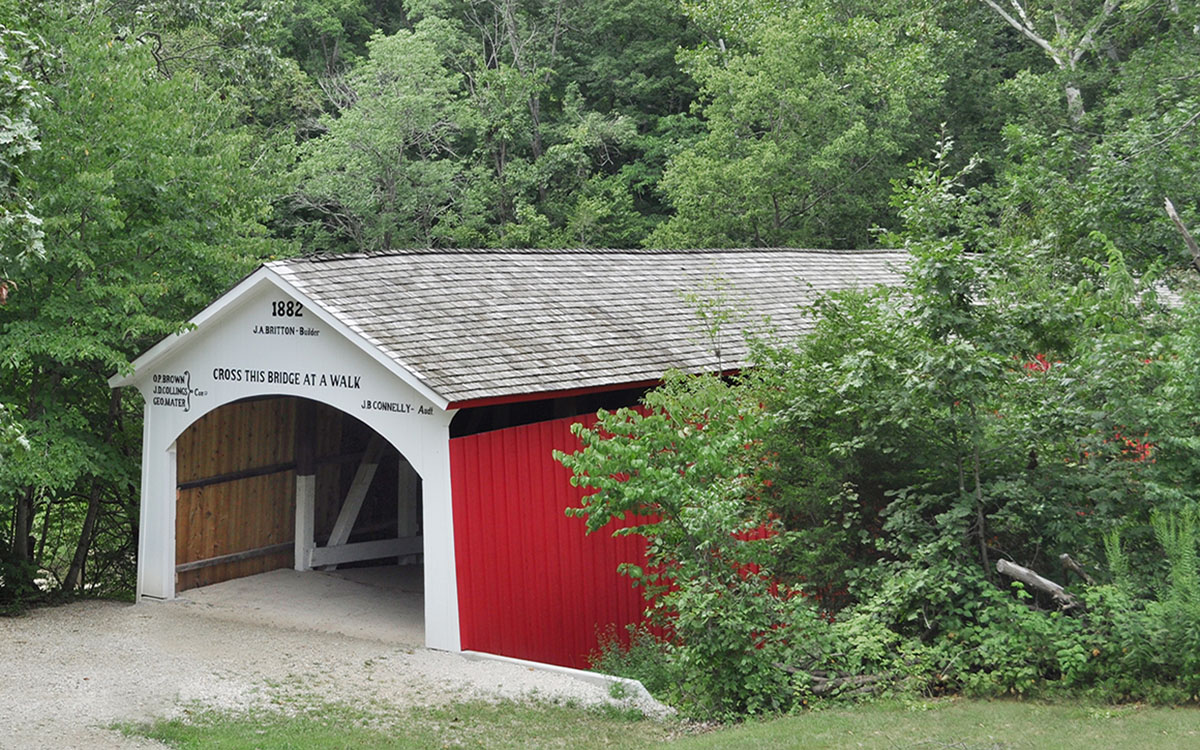
Narrows Bridge
Burr Arch construction by J.A. Britton. Bridge was retired in 1960 and is maintained by the State of Indiana as it is located within Turkey Run State Park.
Crosses: Sugar Creek
Near: Turkey Run State Park
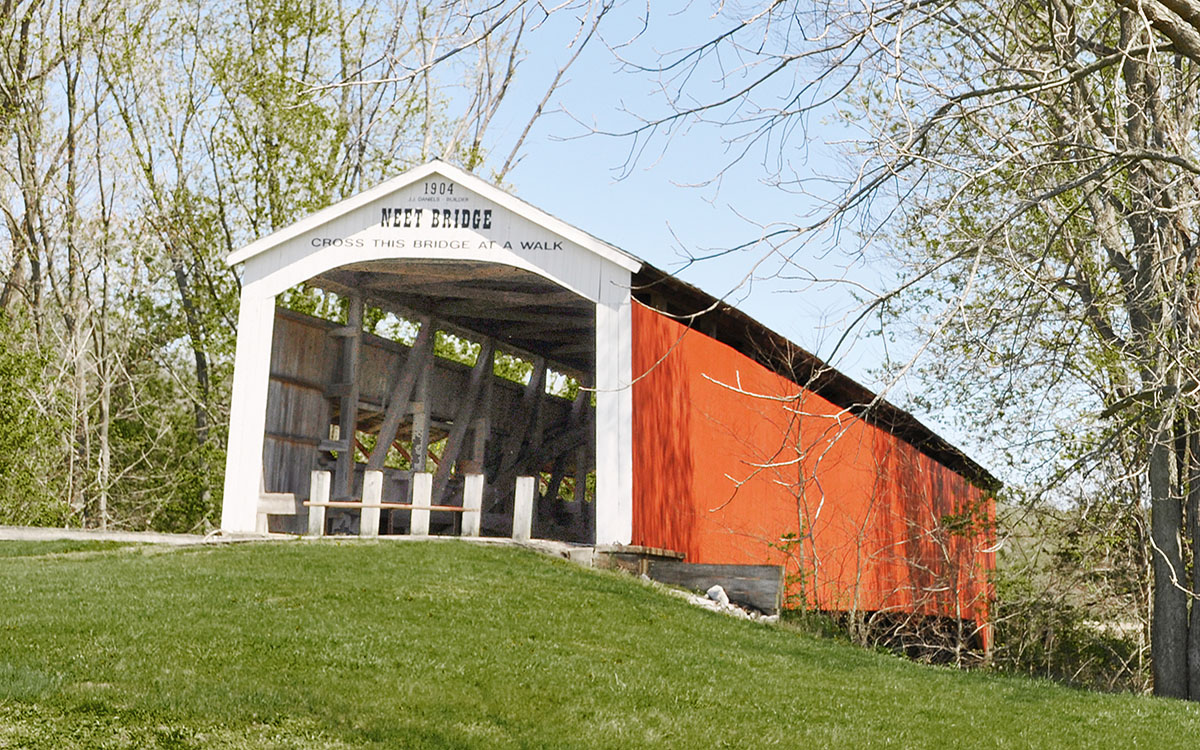
Neet Bridge
Burr Arch construction by Joseph J. Daniels.
Crosses: Little Raccoon Creek
Near: Rockville
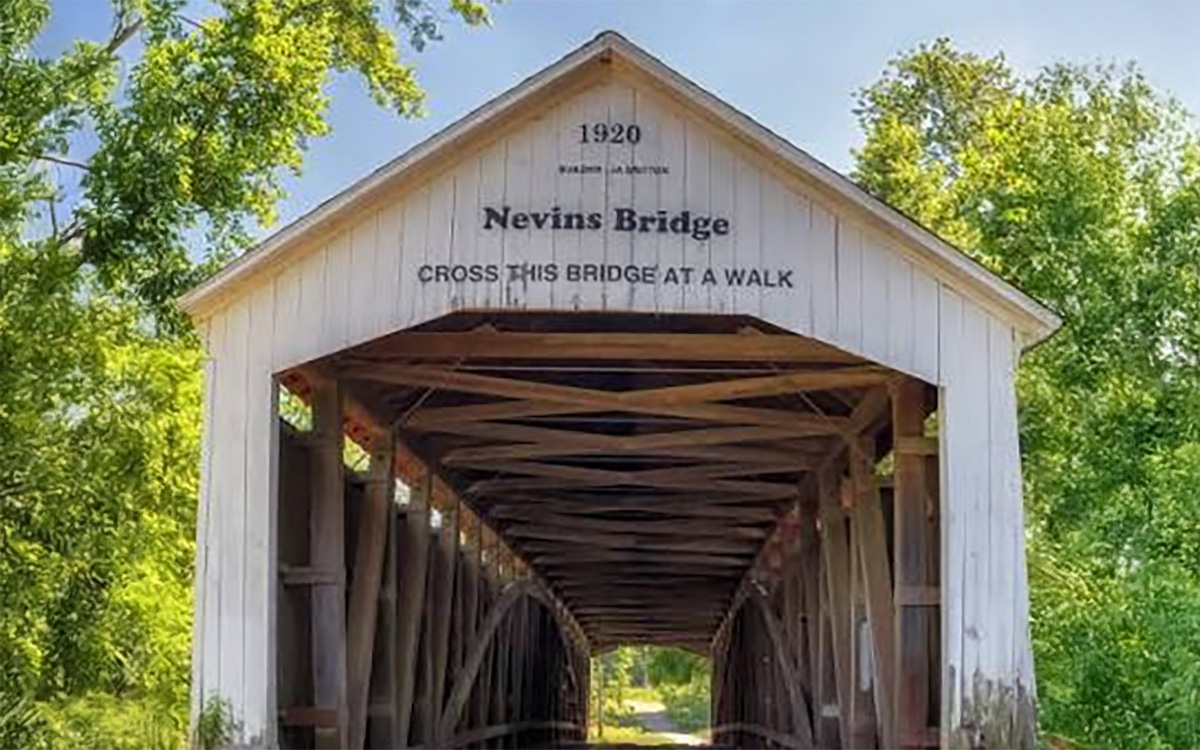
Nevins Bridge
Burr Arch construction by J.A. Britton and son. Last bridge by Britton at the age of 80. 7 tons limit.
Crosses: Little Raccoon Creek
Near: Catlin | County Road 130 East
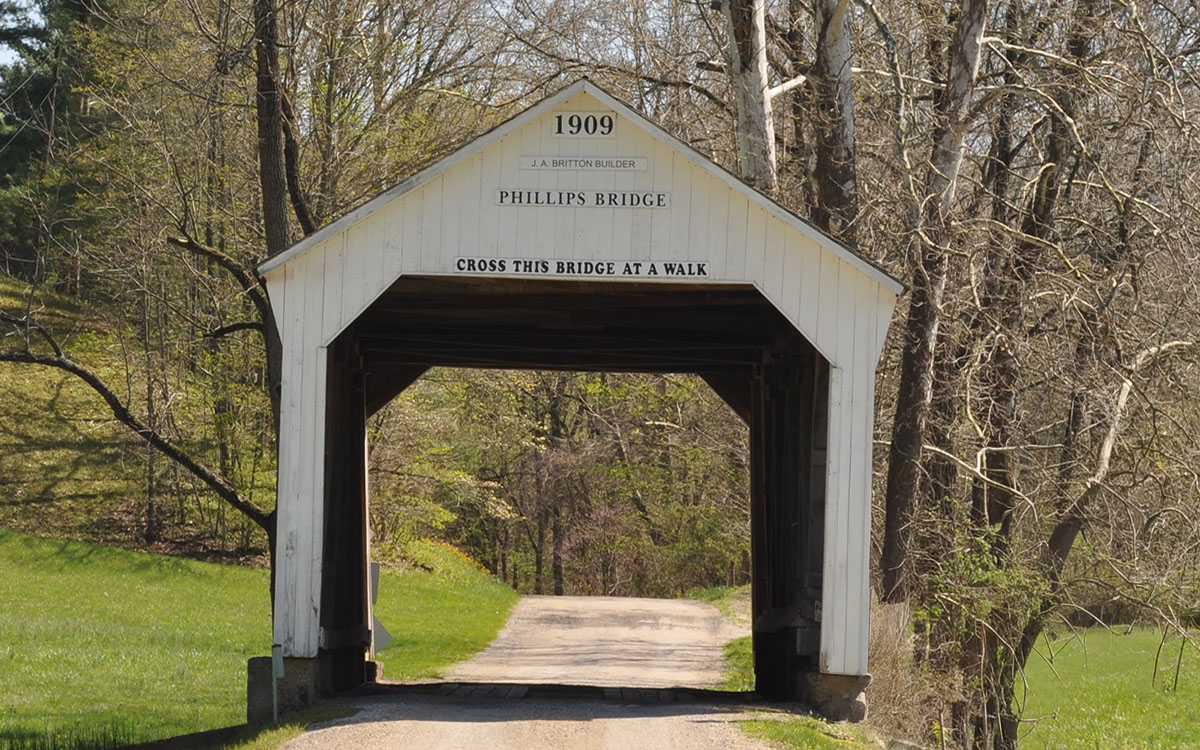
Phillips Bridge
King Post Truss by J.A. Britton. 6 tons limit.
Crosses: Big Pond Creek
Near: Arabia Road by US Route 36
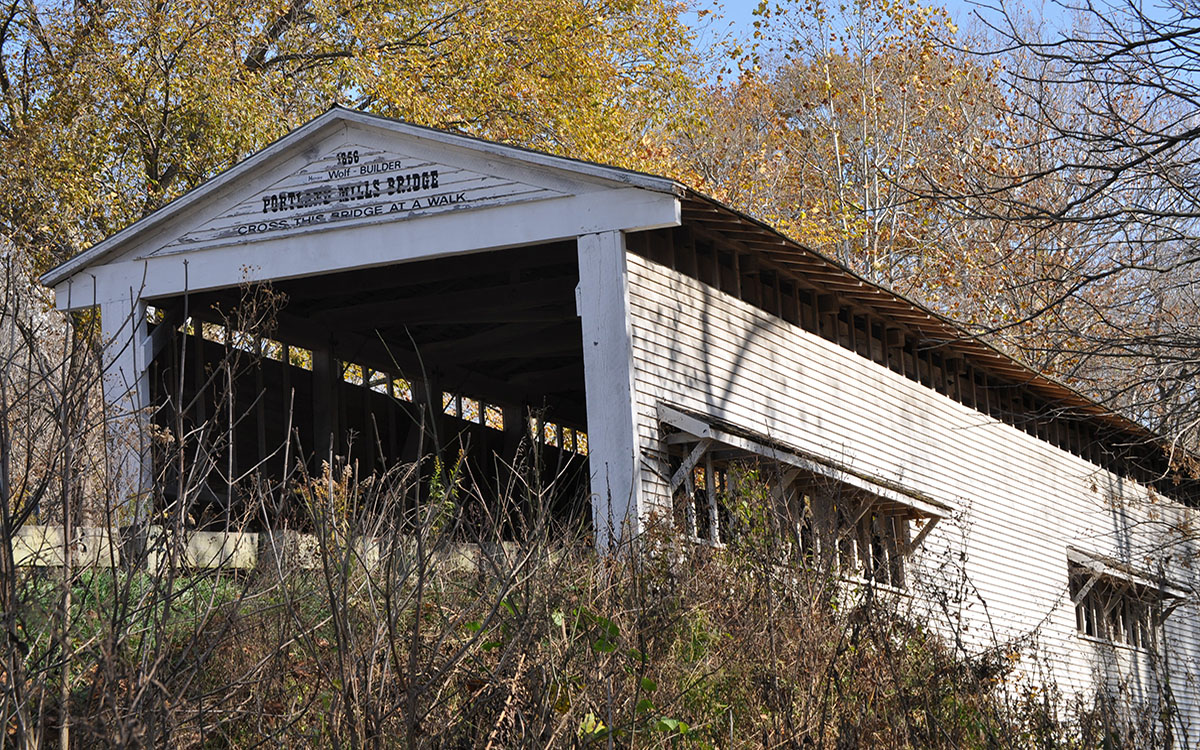
Portland Mills/Dooley Station Bridge
Burr Arch construction by Henry Wolfe. Replaced the Dooley Station Bridge #3 destroyed by fire in 1960. 13 tons limit.
Crosses: Little Raccoon Creek
Near: Waveland
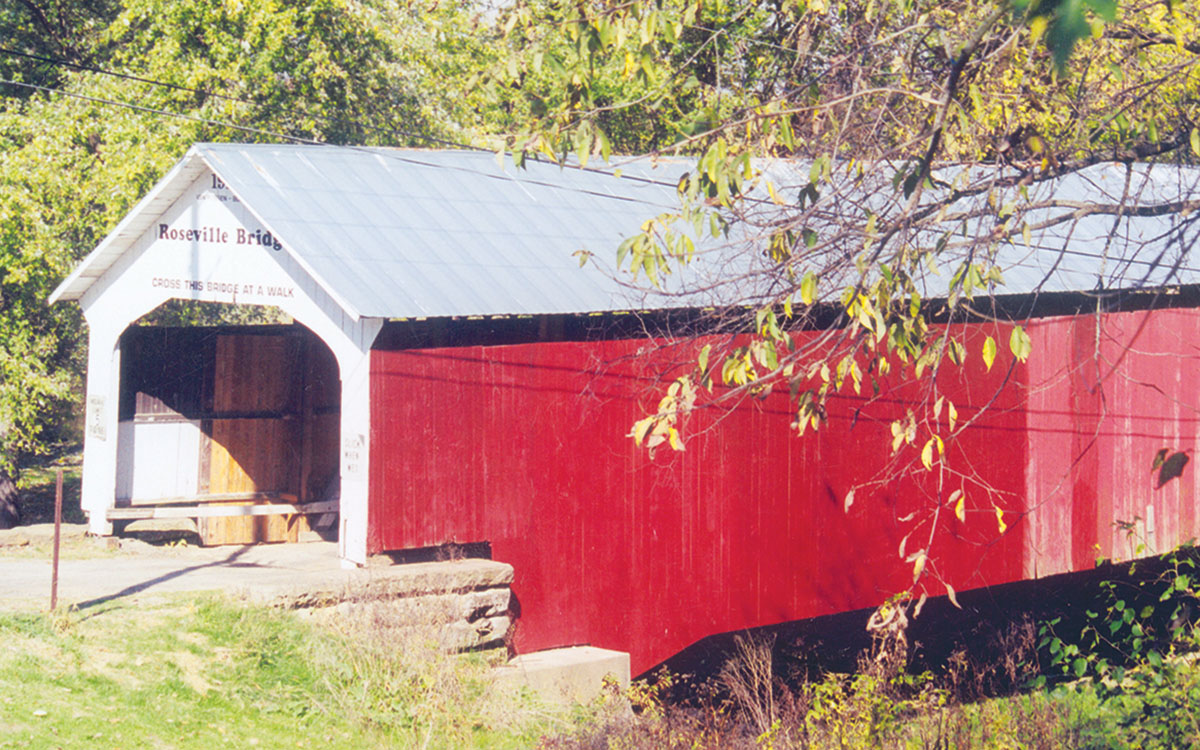
Roseville Bridge
Burr Arch construction by Van Fossen. Built to replace another bridge destroyed by arson. Double span. Sometimes referred to as the Coxville Bridge. 5 tons limit.
Crosses: Big Raccoon Creek
Near: Rosedale
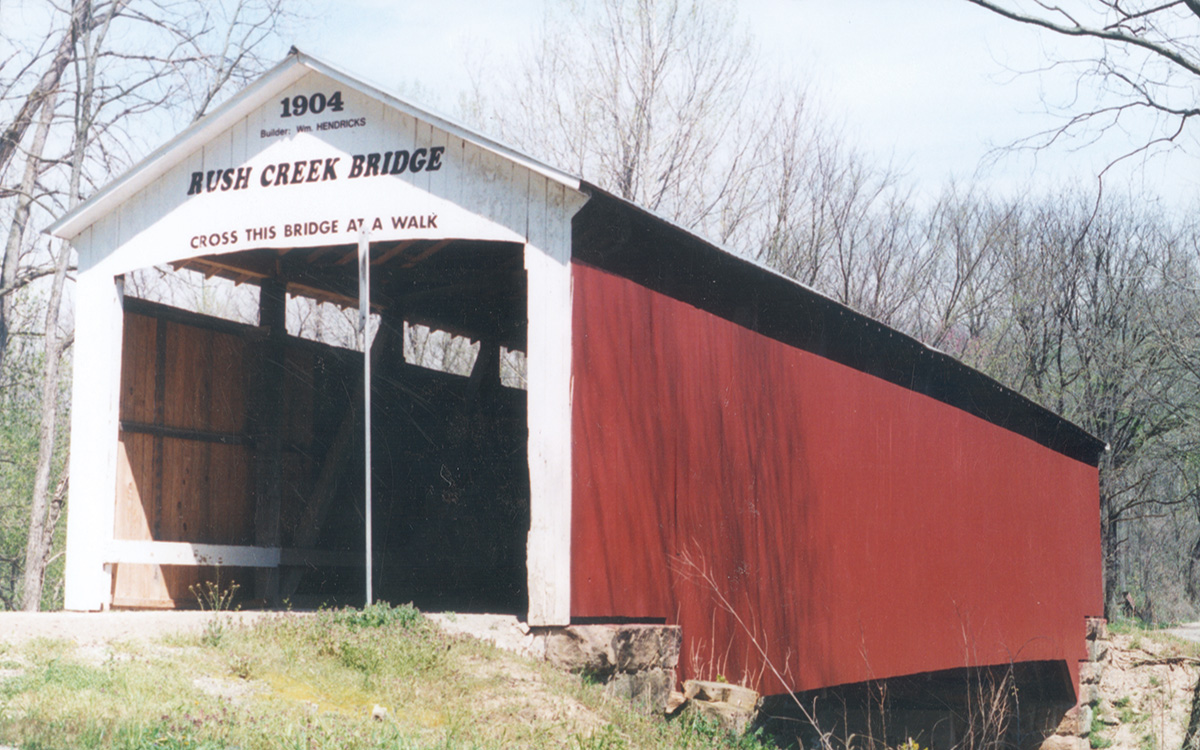
Rush Creek Bridge
Burr Arch construction by Wm. Hendricks. 4 tons limit.
Crosses: Rush Creek
Near: County Road 900N
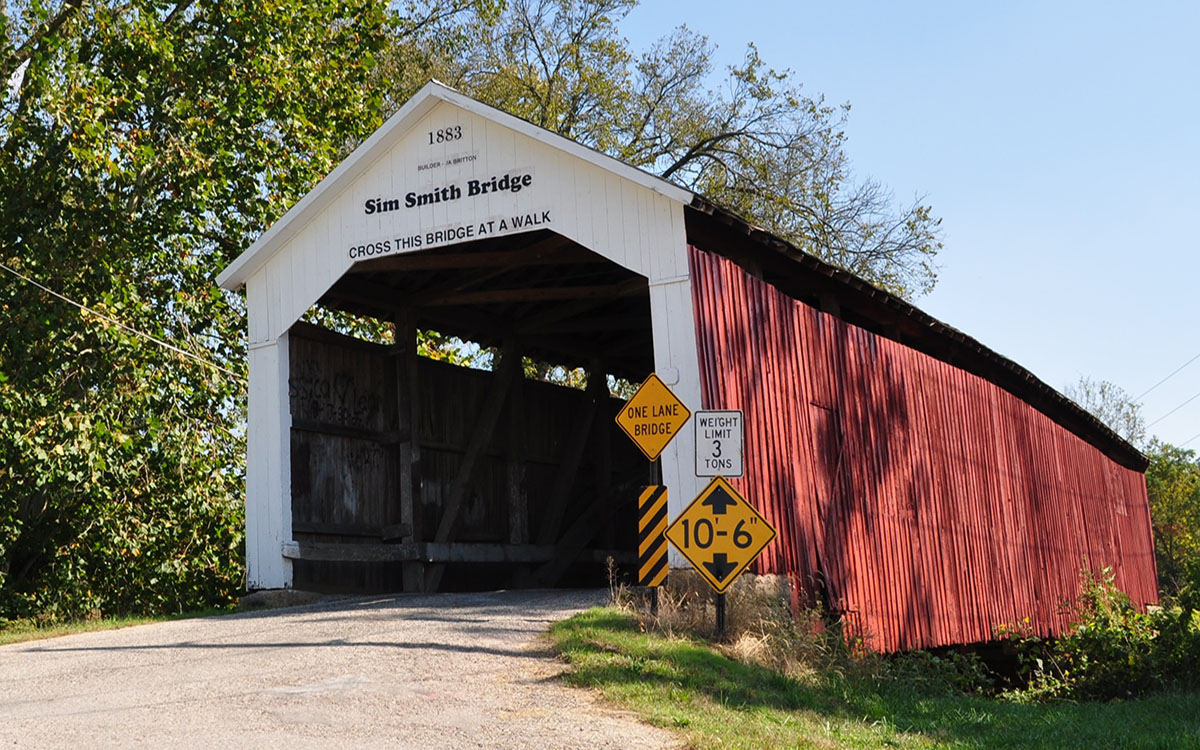
Sim Smith Bridge
Burr Arch construction by J.A. Britton. Locally this bridge has a reputation for being haunted. 8 tons limit.
Crosses: Leatherwood Creek
Near: Montezuma
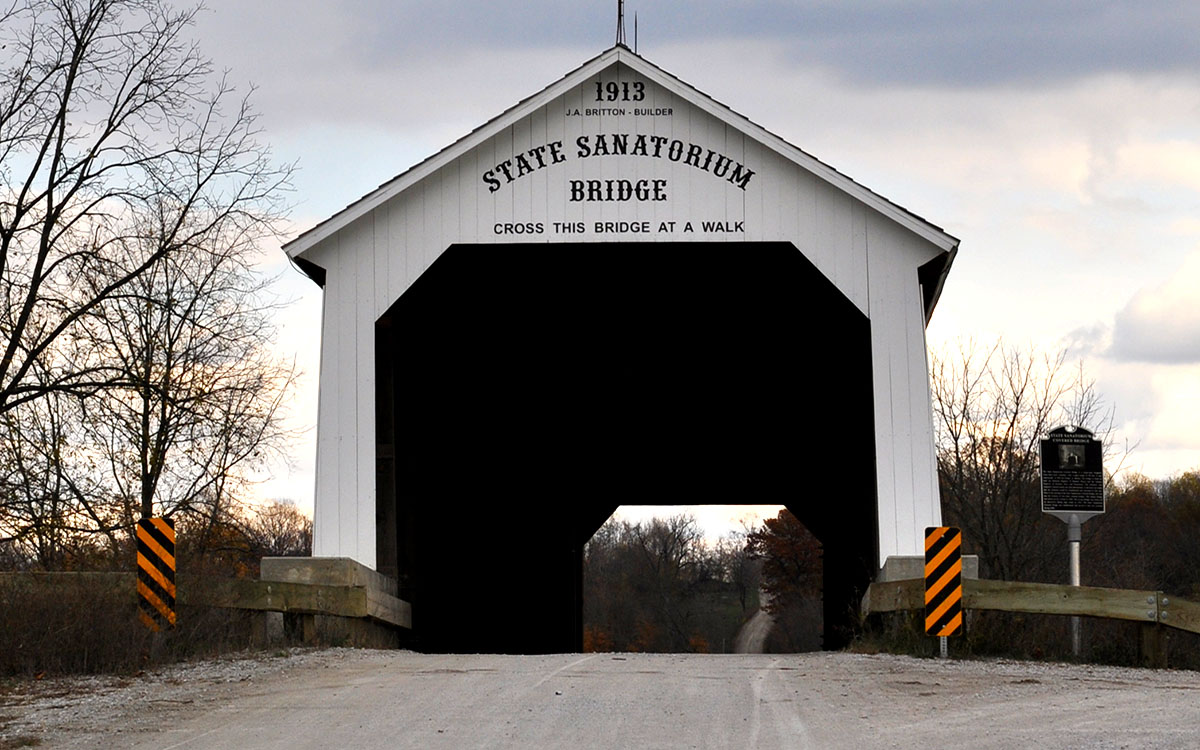
State Sanatorium Bridge
Burr Arch construction by Joseph A. Britton. Only bridge that has lightning rods.
Crosses: Little Raccoon Creek
Near: Rockville
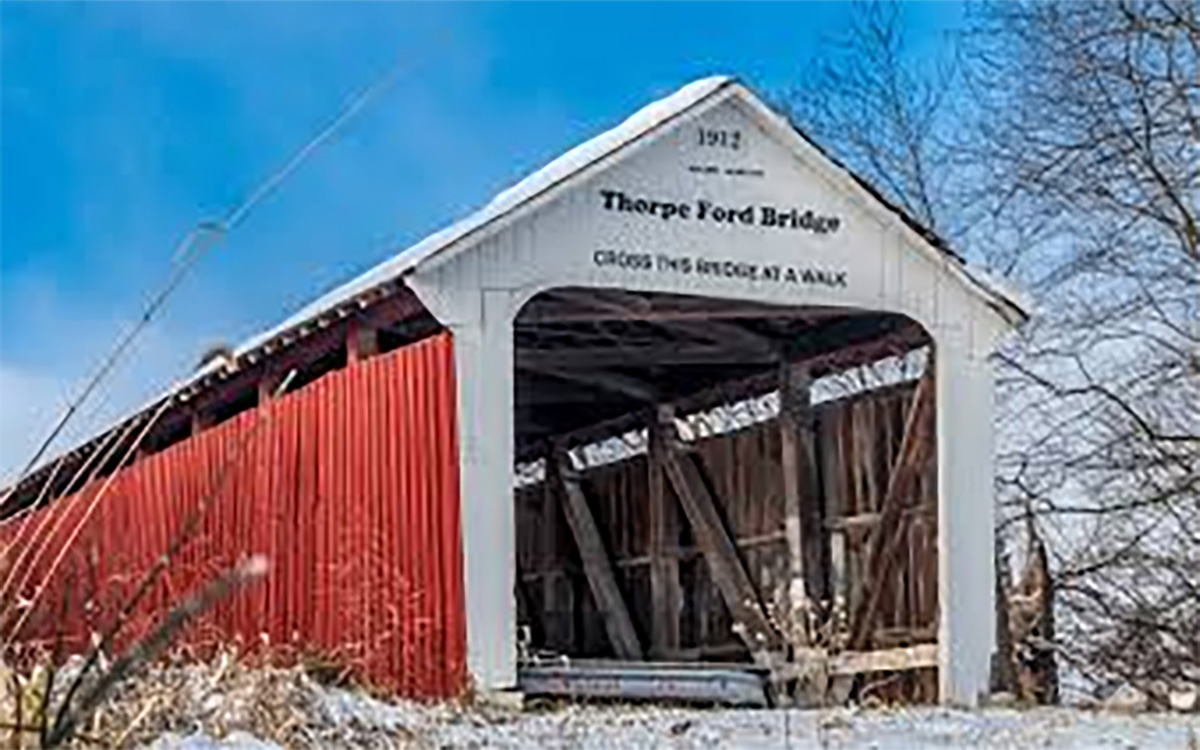
Thorpe Ford Bridge
Burr Arch construction by J.A. Britton.
Crosses: Big Raccoon Creek
Near: Rosedale
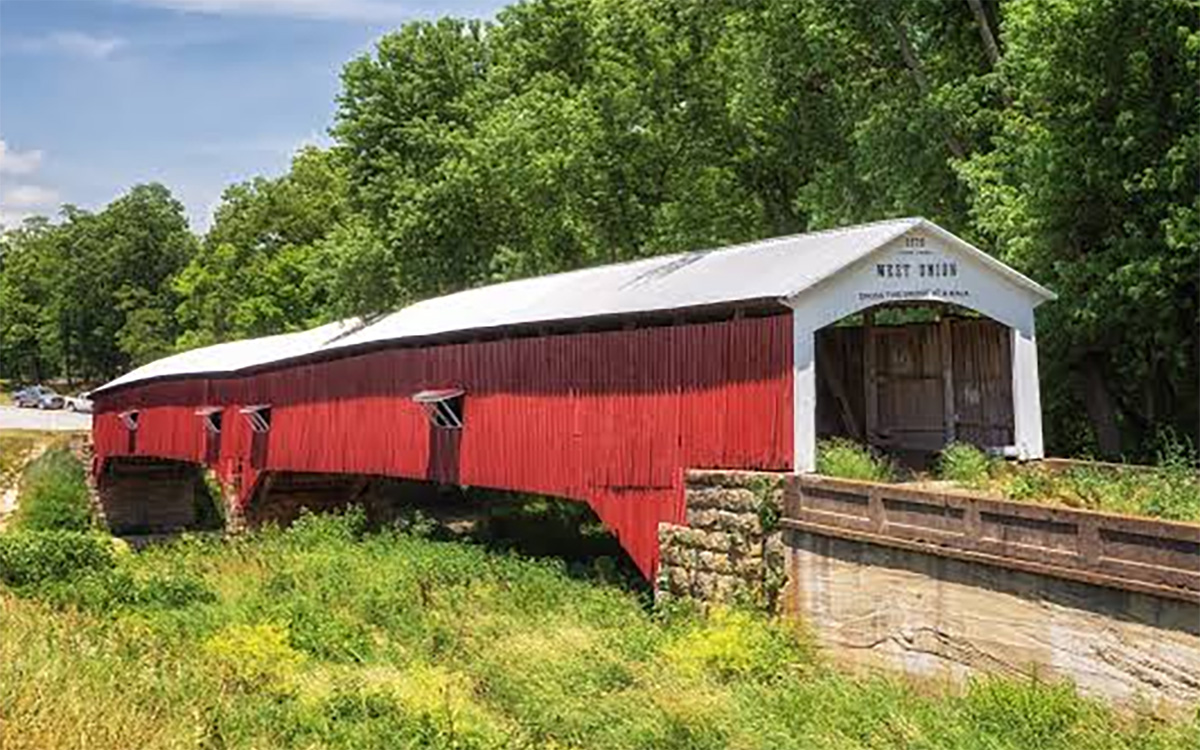
West Union Bridge
Burr Arch construction by Joseph J. Daniels. Double span and longest bridge in Parke County.
Crosses: Sugar Creek
Near: Montezuma
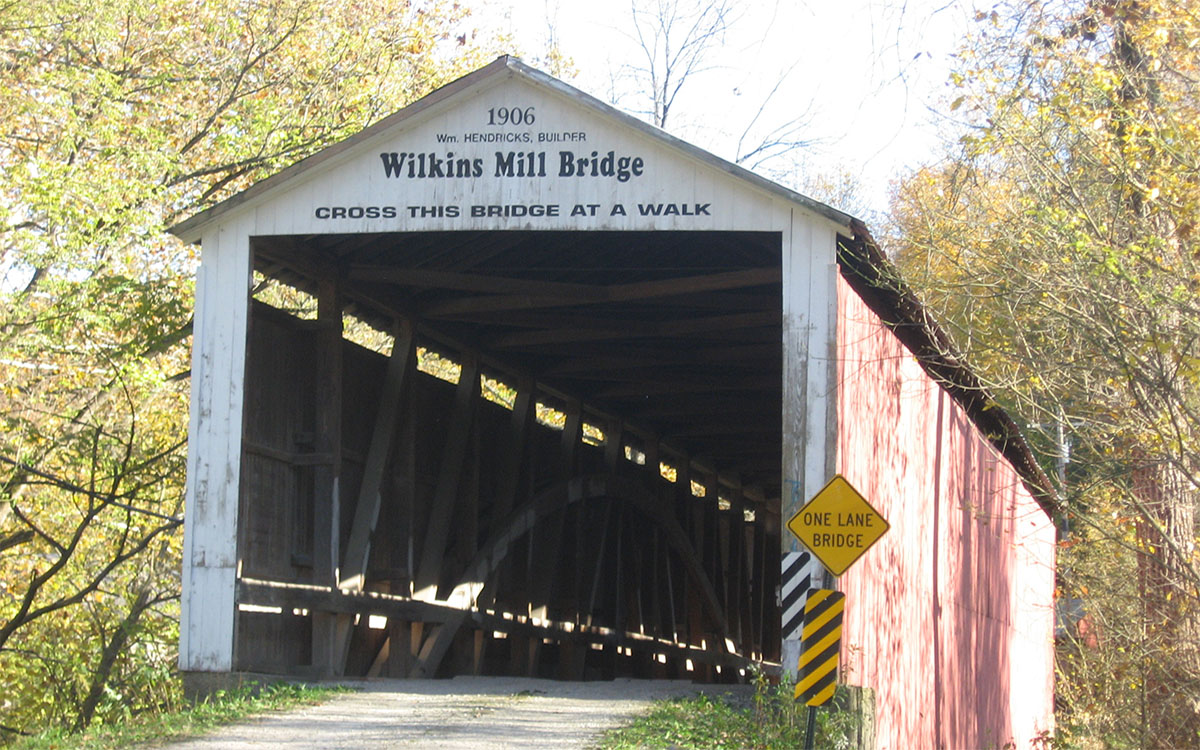
Wilkins Mill Bridge
Burr Arch construction by Wm. Hendricks. Named for a mill that formerly stood nearby.
Crosses: Sugar Mill Creek
Near: 8904 N. Cox Ford Road
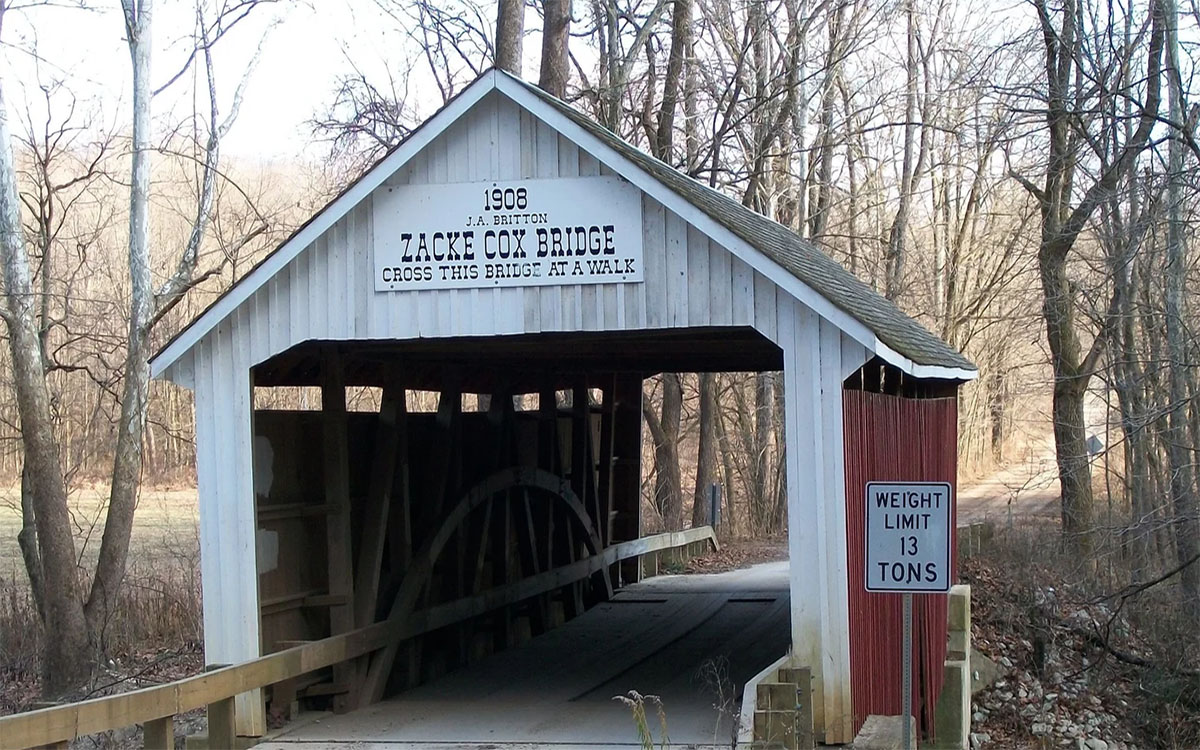
Zacke Cox Bridge
Burr Arch construction by J.A. Britton. 5 tons limit.
Crosses: Rock Run Creek
Near: Tickridge Road
No bridges match that search. Try a different name or region.
Find Your Way
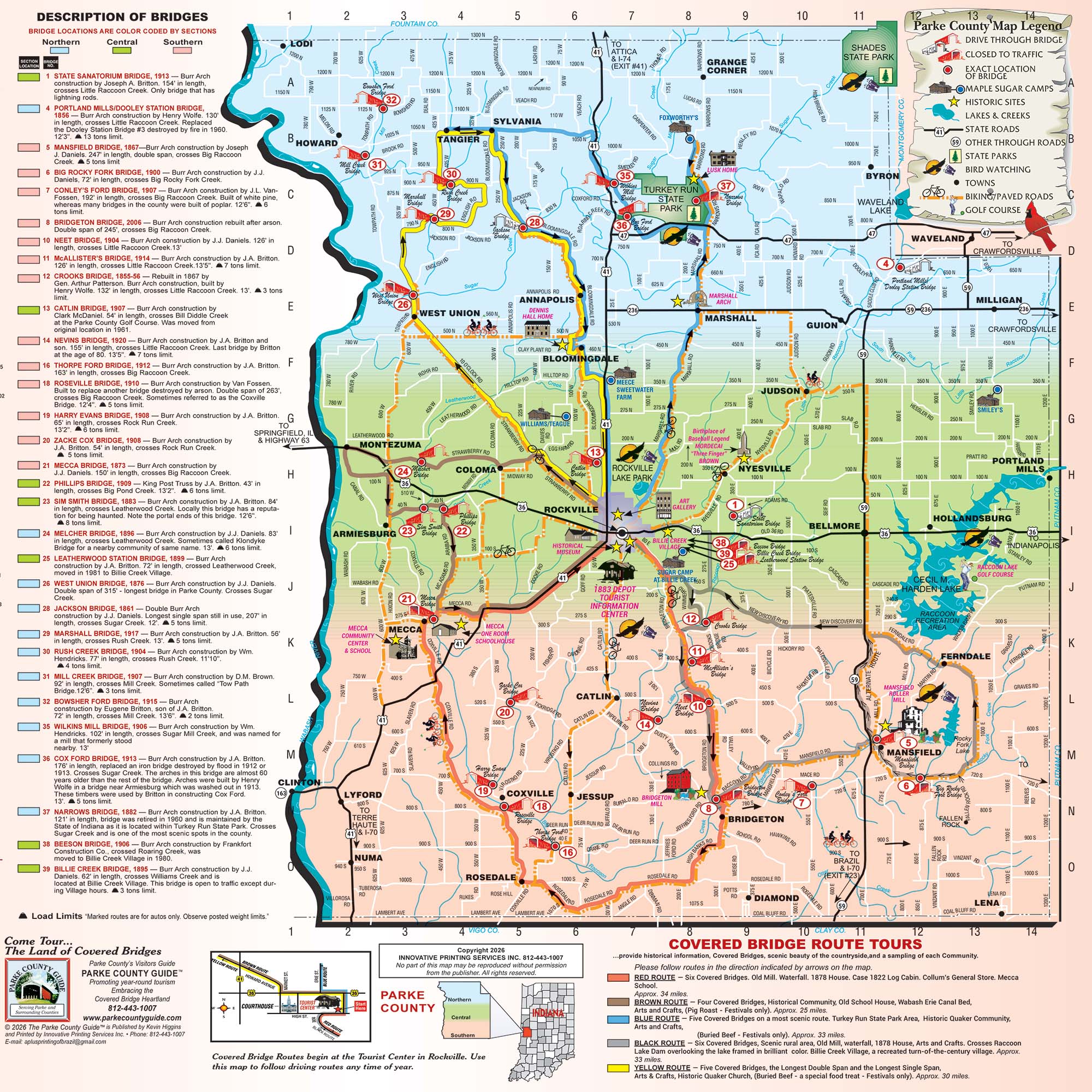
Covered Bridge Map
See every bridge at a glance. The printed Parke County Guide includes a full-size map you can take on the road.
Visit Respectfully
Bridge Visiting Tips
Help keep these historic bridges standing for the next generation.
Park off the road
Many bridges sit on narrow country roads. Pull fully off the road before stopping for photos.
Check posted limits
Some bridges have height or weight limits, and some may be closed to vehicles. Follow posted signs.
One lane at a time
Most covered bridges are single-lane. Slow down, look ahead, and yield to oncoming traffic.
Respect private property
Many bridges are surrounded by private land. Stay on public roads and right-of-way.
Leave no mark
Please don’t carve, paint, or write on the bridges. They’re historic structures, not guest books.
Chase the light
Early morning and late afternoon light, especially in fall color season, makes for the best photos.
The 2026 Parke County Guide
Take the map with you.
The printed Guide has the full covered bridge map and local stops along the way. Read it online or pick up a free copy.
Visiting in October?
See the bridges during the Covered Bridge Festival.
Pair your bridge tour with a stop in the festival towns for food, crafts, and small-town fun.